
Academic researchers: select research offerings, derived from our products, free for academic research
H&E Spatial Profiling
H&E Spatial Profiling
PanCAN
SPARK
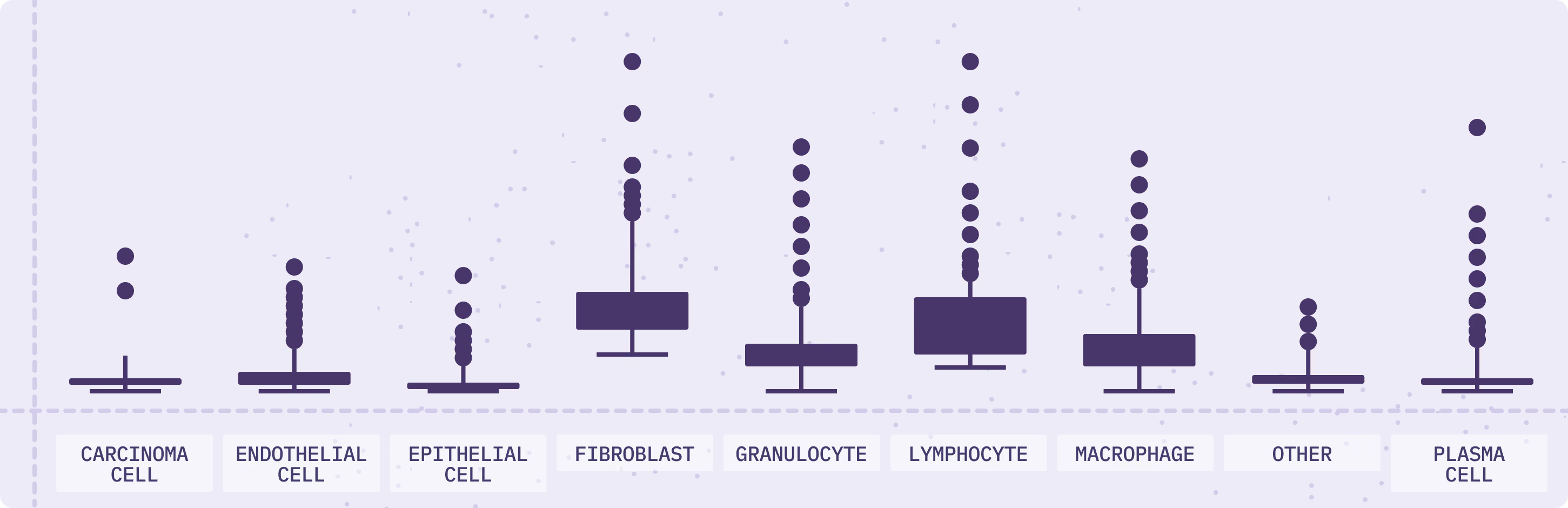
4,691 TCGA whole-slide images, fully analyzed with HETA.
RudolfV 2
4,691 TCGA whole-slide images, fully analyzed with HETA.
OpenTME
TCGA is one of the most comprehensively characterized cancer cohorts available, with linked genomic, transcriptomic, proteomic, and clinical data.
OpenTME provides HETA outputs for thousands of TCGA whole-slide images, including pre-computed spatial features in .csv format covering tissue quality control, tissue segmentation, cell detection / classification, and neighborhood analyses.
OpenTME is an ongoing initiative. We will continue to add new TCGA images as HETA coverage expands to additional cancer types.
Research Access Program
Run your own slides, at no cost
The Research Access Program is an application-based initiative that provides free access to HETA for select academic projects.
Selection process
We review applications on a rolling basis and select projects based on scientific merit. There is no cost to apply or to participate in the Program. We aim to respond to all applicants within 2 weeks of submission. The application should take no more than 30 minutes to complete.
The application covers

Basic information about you and your institution
An overview of your proposed project and its scientific impact
Future publication plans
PanCAN SPARK
Pancreatic cancer profiles from PanCAN
HETA profiles and linked multimodal data for 1,400+ pancreatic cancer patients, available through the PanCAN SPARK platform.
RudolfV 2: open-access pathology foundation models
Across a broad set of public benchmarks, RudolfV 2 is the best performing open-access pathology foundation model, approaching the performance and robustness of our flagship model, Atlas 2. Two distilled versions preserve high performance at a fraction of the compute.
RudolfV 2 includes a dedicated post-training stage, a first for pathology foundation models.
.svg)