
Atlas H&E-TME for Academics
Accelerating cancer research with AI-powered TME analysis
Overview
Understanding the spatial organization of the tumor microenvironment is central to uncovering the mechanisms behind cancer progression and treatment response. Atlas H&E-TME for Academics makes our spatial TME analysis accessible to the broader scientific community, enabling analyses that connect H&E-derived spatial features to genomic, transcriptomic, and clinical data.
OpenTME
Explore our open-access dataset of thousands of TCGA whole-slide images, fully analyzed with Atlas H&E-TME. Pair this data with the rich molecular and clinical annotations provided by TCGA to power your multimodal cancer research.
Research Access Program
Academic institutions can apply to run their own H&E slides through Atlas H&E-TME at no cost, bringing state-of-the-art spatial analyses to their research. Applicants fill out a short form covering their research background, proposed project, and publication plans – forms are reviewed on a rolling basis.
OpenTME
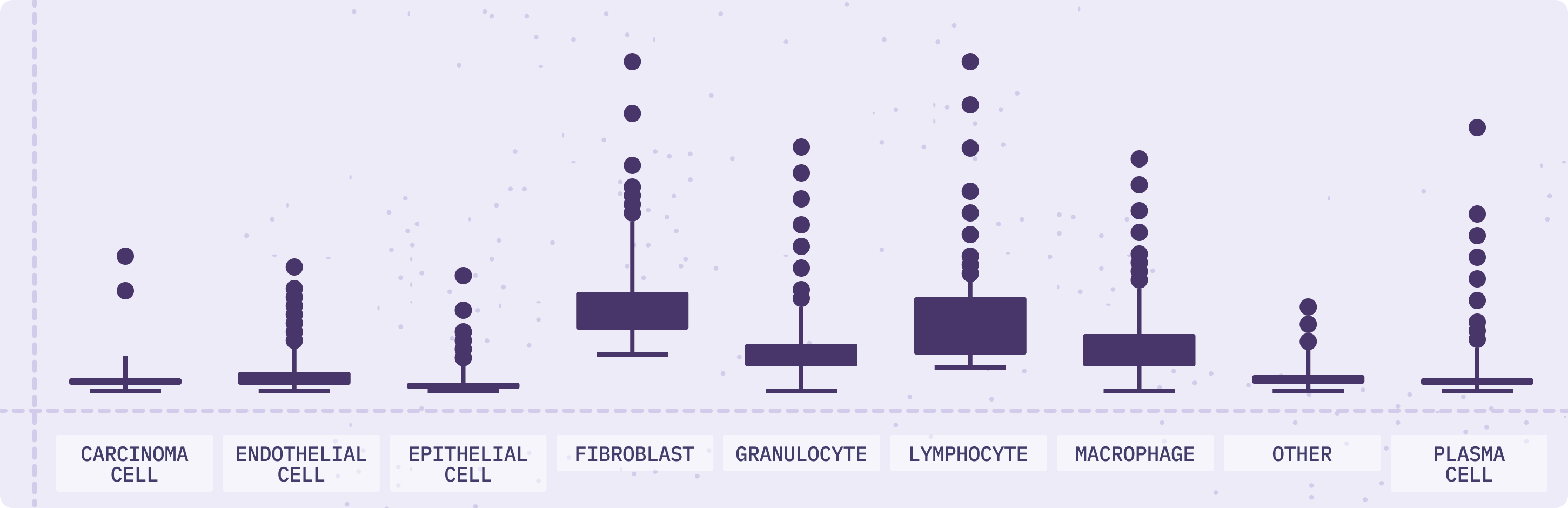
OpenTME provides open-access Atlas H&E-TME outputs for thousands of TCGA whole-slide images, including pre-computed spatial features in .csv format covering tissue quality control, tissue segmentation, cell detection / classification, and neighborhood analyses. Access is also provided to TME Studio, a suite of Marimo notebooks with tutorials on the data structure and basic analyses to serve as a starting point for deeper exploration.
TCGA is one of the most comprehensively characterized cancer cohorts available, with genomic, transcriptomic, proteomic, and clinical data linked to individual patients.
By adding Atlas H&E-TME's spatial analyses to that foundation, OpenTME makes it possible to correlate H&E-derived features – cell-cell interactions, stromal composition and distribution, local cellular neighborhoods, and nuclear morphology – directly with molecular and clinical data, enabling multimodal research that goes well beyond classic immune infiltration metrics.
OpenTME is an ongoing initiative. We will continue to add new TCGA images as Atlas H&E-TME coverage expands to additional cancer types.
Research Access Program
The Research Access Program provides academic researchers with free access to Atlas H&E-TME. Through this Program, we partner with leading institutions to accelerate high-impact academic projects.
What's included:
.svg)
Processing of your own H&E slide images through Atlas H&E-TME
Polygon overlays for tissue quality control, tissue segmentation, and cell classification, viewable in our proprietary pathology viewer
Quantitative outputs covering spatial features at the cell, tissue, and neighborhood level
Dedicated support from the Aignostics team throughout your analysis
Selection process
We review applications on a rolling basis and select projects based on scientific merit. There is no cost to apply or to participate in the Program. We aim to respond to all applicants within 2 weeks of submission.
The application should take no more than 30 minutes to complete.
What the application covers:
Basic information about you and your institution
An overview of your proposed project and its scientific impact
Future publication plans
.svg)
Atlas H&E-TME is intended for research use only. Not for use in diagnostic procedures.